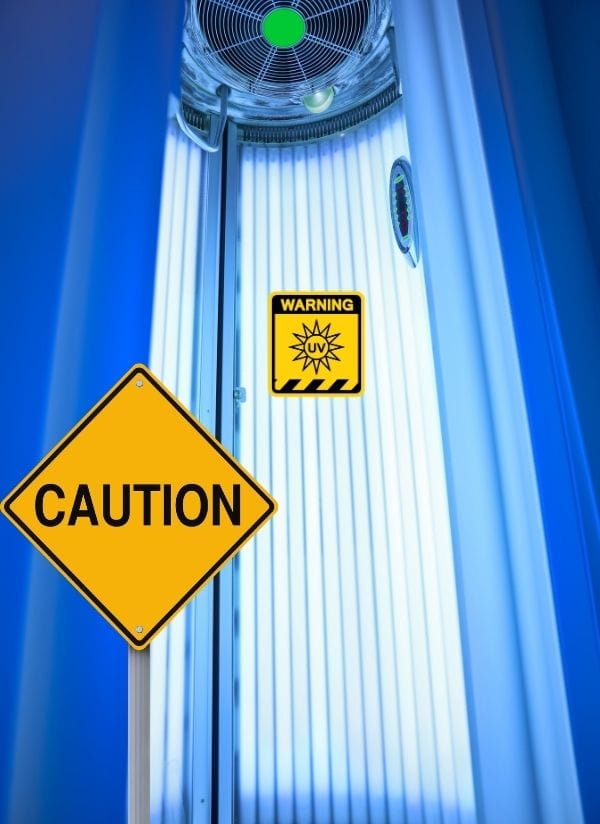
The facts surrounding sunbed use and why its "not the way to glow"
Sunbeds – A preventable risk
Sunbeds emit controlled ultraviolet (UV) radiation, specifically a combination of UVA and UVB rays from lamps containing mercury vapour, which simulates the rays to induce tanning. This radiation penetrates the skin, stimulating melanocytes to produce melanin, the pigment responsible for darkening the skin and damages your DNA.
UV radiation from Sunbeds is a known carcinogen that means it can cause cancer. In 2009, the World Health Organisation classified tanning devices as Group 1 carcinogens, the same category as tobacco and asbestos. Too much UV radiation is the 3rd biggest cause of cancer and the main cause of skin cancer in the UK.
In the UK sunbeds are illegal for under 18s to use. Yet sunbeds remain legally accessible in the UK for adults, with very limited regulation.
Every time you use a sunbed you are damaging your skin and increasing your risk of skin cancer. Research shows that people who have used a sunbed at least once have a 20% higher risk of melanoma. Using a sunbed before the age of 35 increases melanoma risk by up to 59%
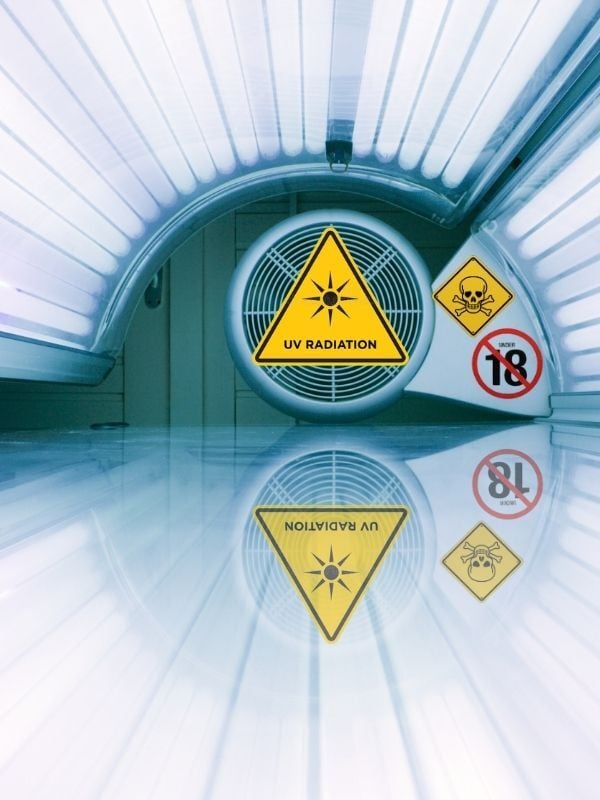
Key Risks of Sunbed Use
• Skin Cancer: Sunbeds are a major cause of skin cancer, particularly melanoma. The risk increases by up to 20% for each decade of use up to age 56.
• Premature Aging: UV exposure causes premature wrinkles, leather-like skin, and sunspots.
• Eye Damage: Without proper protection, sunbeds can cause cataracts (clouding of the lens) and ocular melanoma
• Skin Damage: Sunbeds can cause severe, painful sunburns.
• Precancerous Lesions: Regular use can lead to actinic keratosis, which are rough, scaly patches that can turn into skin cancer.
• Increased Risk for Young Users: Using a sunbed before age 35 is especially dangerous, with studies showing a 60% increase in melanoma risk for young users.
Sunbed Q & A
Are any sunbeds safe to use?
No. Sunbeds emit ultraviolet (UV) radiation that damages skin cells and increases the risk of melanoma and other skin cancers. There is no safe level of exposure.
Is a tan a sign of healthy skin?
No. A tan is the skin’s response to injury from UV radiation. It indicates DNA damage within skin cells, even if there is no redness or burn.
Do sunbeds provide a safe “base tan” before holidays?
No. A base tan offers minimal protection and does not prevent sunburn or long-term skin damage. It simply adds more UV exposure before you even go into the sun
If I only use sunbeds occasionally, is that OK?
Even occasional use raises melanoma risk. The damage from UV exposure builds over time, and risk increases with each session.
Are modern sunbeds safer than older ones?
No. Some claim to use “controlled UV,” but the radiation is still classified as carcinogenic by the World Health Organisation. Regulation does not make them safe.
Can sunbeds help with vitamin D?
They are not recommended for this purpose. Sunbeds use mainly UVA light so they don’t offer any significant Vitamin D benefits. UVB light is needed for the skin to make Vitamin D.
Safer ways to maintain vitamin D levels include short periods of daylight exposure, food sources and supplements.
Are sunbeds safe for people who don’t burn easily?
No. Skin that tans easily is still damaged by UV radiation. Melanoma can affect all skin tones, and risk increases with cumulative exposure.
Why are sunbeds restricted for under-18s?
Because young skin is more vulnerable to UV damage. Early exposure significantly increases lifetime melanoma risk, which is why UK law prohibits commercial sunbed use for minors.
Do sunbeds have any health benefits?
Medical light therapy is sometimes prescribed for certain skin conditions, but this is very different from commercial sunbeds. Clinical treatments are carefully controlled and supervised; tanning beds are not medical devices.
What’s the safest choice?
The good news is that up to 9 in 10 cases of melanoma skin cancer in the UK could be prevented by staying safe in the sun and avoiding sunbeds.
The safest tan is no tan — protecting your natural skin tone is the best defence against skin cancer.