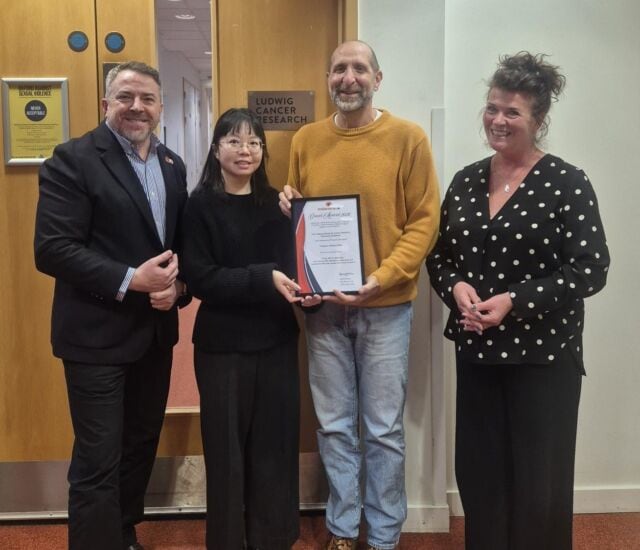
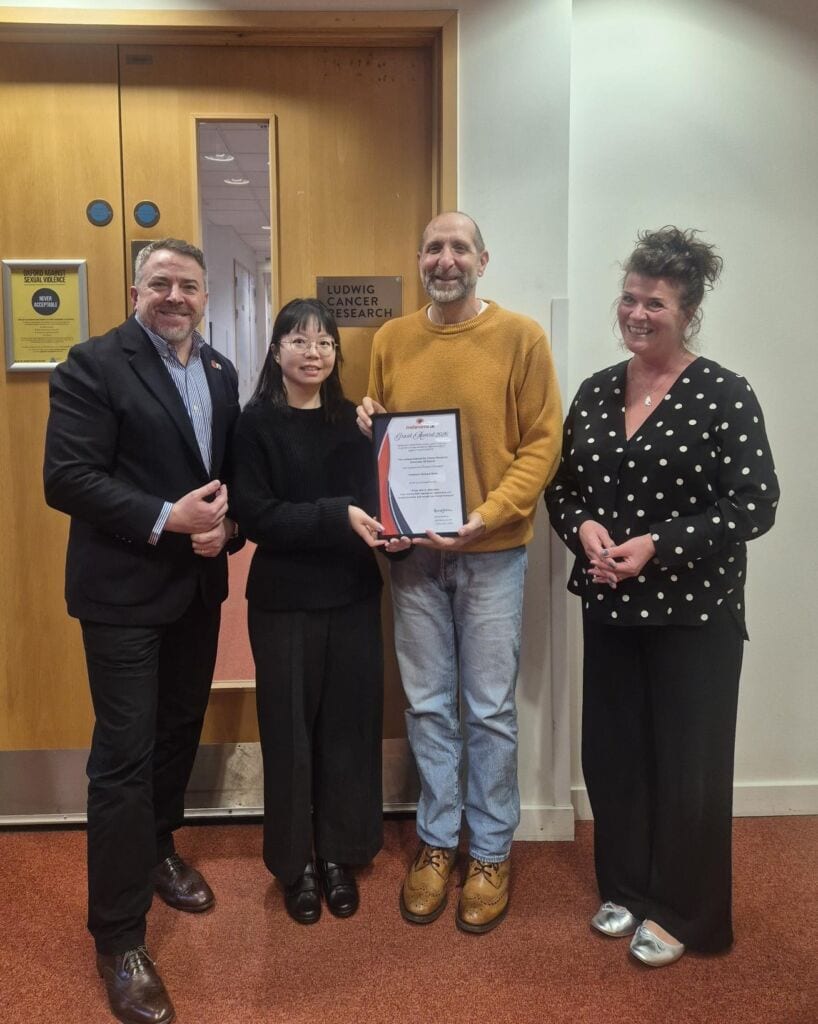
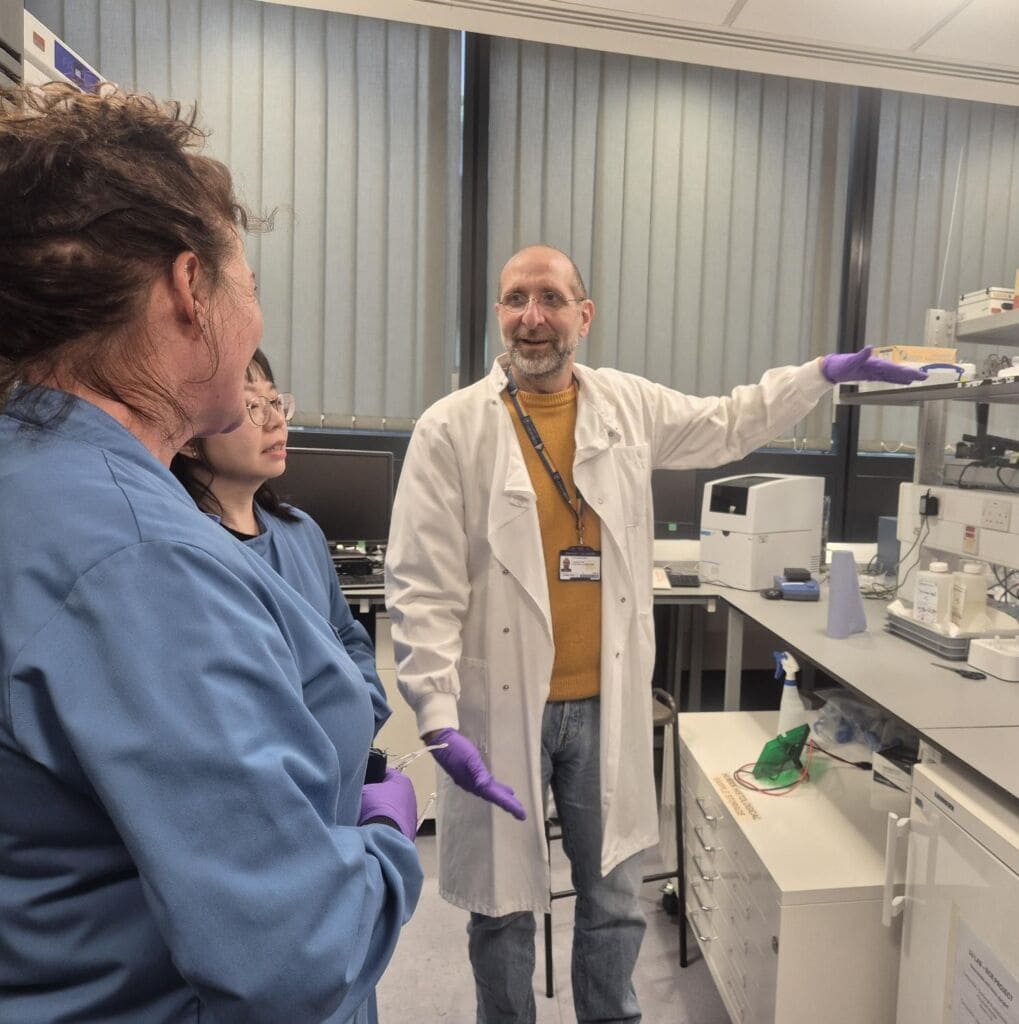
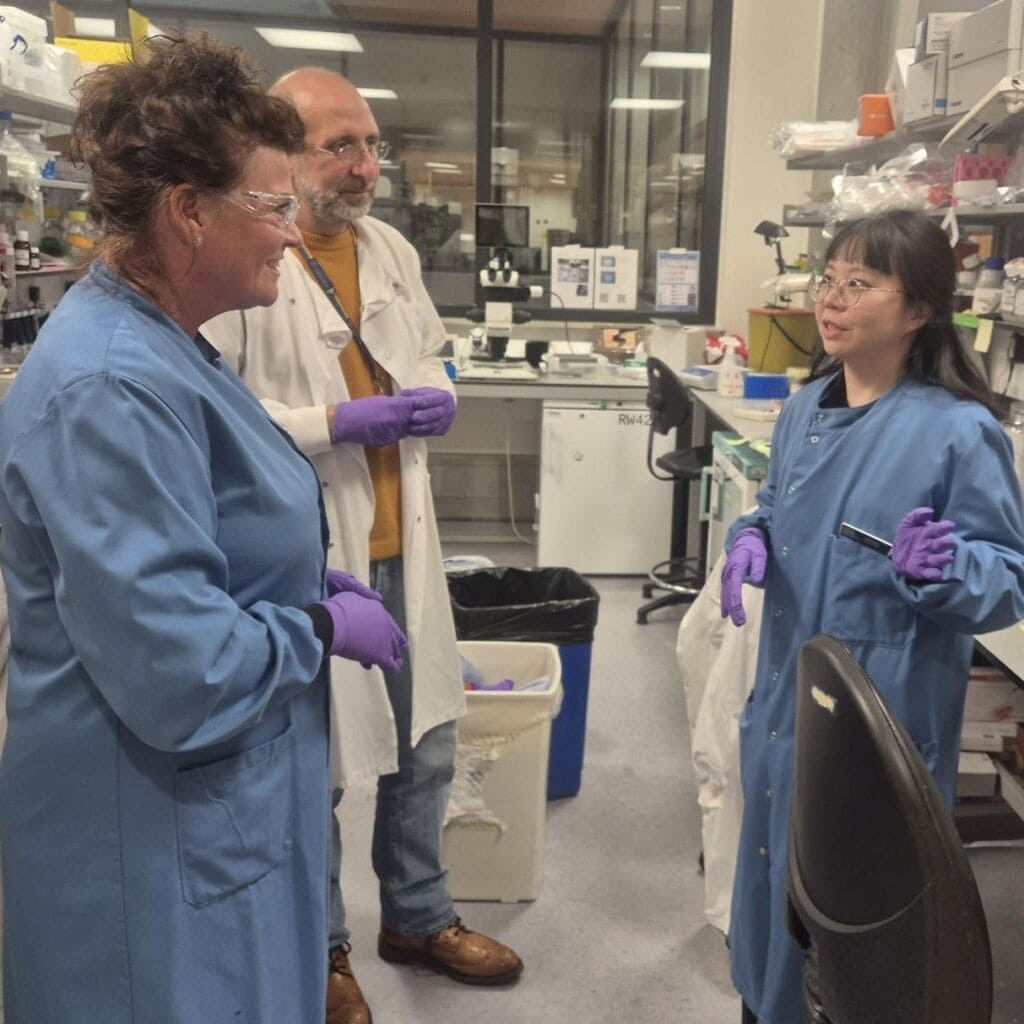
Last week our CEO, Rachel Wallace and COO Colin Glover, visited The Ludwig Cancer Research Centre (at the University of Oxford) to meet Professor Richard White (PI) and Dr Sinan Xiong (Postdoc) and present their Melanoma UK grant certificate.
The project we are funding is titled: From diet to detection: how dietary fats reprogram melanoma cell communication and reveal new blood markers.
Professor White said of our grant award,
“Melanoma UK is providing support for our project at a critical moment, when we are still exploring new ideas and trying to understand how it impacts the disease“.
Cancer cells constantly exchange messages with the healthy cells around them. The team’s previous work suggests that fatty acids can change the proteins melanoma cells release, potentially influencing how neighbouring cells behave.
Over the next two years, the researchers will explore how this communication works and whether some of these proteins can be detected as blood markers. The hope is that their findings could help lay the foundations for blood tests to detect melanoma earlier and predict how patients may respond to treatment. Professor white went on to say,
“These types of early investigations are hard to fund through other mechanisms such as government or companies, so charities fill this gap. We hope that our discoveries will open up new opportunities for treatment of a disease that still affects so many people around the world.”
Thank you to the team at Oxford for welcoming us and explaining the science behind this fascinating project. We look forward to sharing updates as the research progresses.
It is a privilege to see how the generosity of our donors and fundraisers supports research with the potential to improve the lives of people affected by melanoma. Thank you to everyone who makes this possible and we hope Prof Rich’s words inspire more people to donate and support our mission