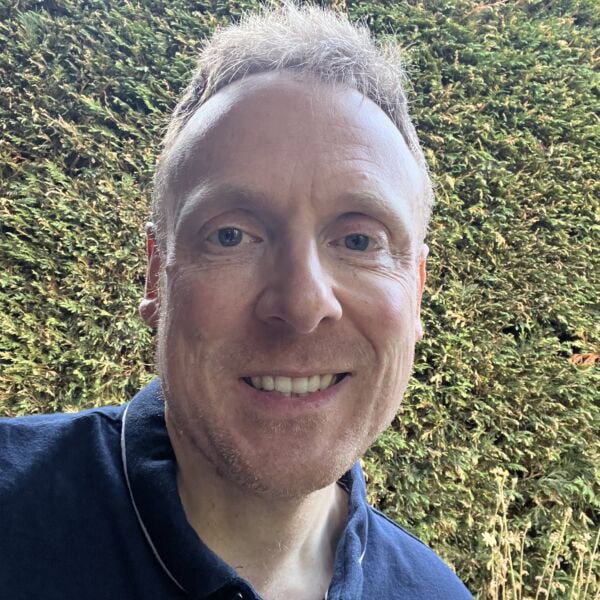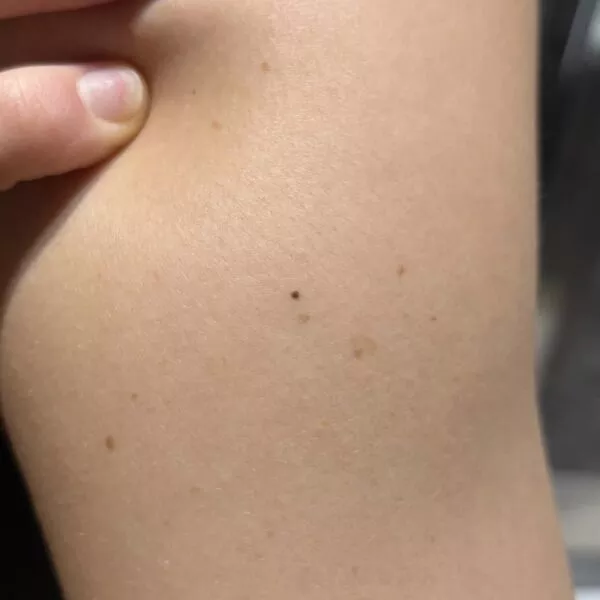
This is a powerful reminder of the importance of knowing your skin, recognising changes and getting anything suspicious checked by a healthcare professional.
Read Alex’s story in his own words below, you can also see a summary with some images from Alex on our instagram post
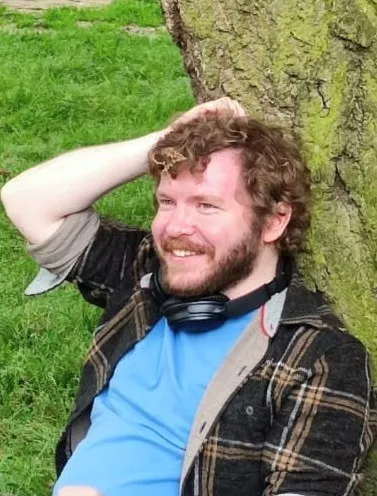
My melanoma story is a successful story of prevention.
I am in my mid-30s, and have had hundreds of moles my entire life. I was told that this was a major risk factor for development of skin cancer since I was a kid. I applied sun screen and stayed away from the sun for prolonged periods of time, but that was about it.
The normal ABCDE advice about monitoring individual moles, I felt, couldn’t feasibly apply to me – I have over a hundred moles on my arms alone, dozens of moles on my back and all over my body – they just could not be feasibly checked by myself. So at some point, I decided, as a birthday gift for myself, to start mole mapping.
Mole mapping is a fancy term for going to a specialised centre where multiple photographs of your entire body are taken. If you keep doing it once a year, a piece of software helps a medical practitioner play Spot The Difference with your skin, and find problems in seconds. The first time I had my moles mapped, in March 2024, the nurse at the private clinic where I got it done spotted a couple of problematic moles, and sent a referral to my GP, who sent me to Guy’s Hospital Dermatology clinic. They rechecked everything, and advised me to monitor moles without suggesting further action.
In 2025, I went for another mole map, which revealed nothing of concern. However, in 2026 the mole map revealed that a mole on my lower back has changed shape and colour. Again, I was referred all the way to Guy’s Hospital. After a few appointments and a multi-disciplinary team assessment, they recommended that the mole be cut out and sent for biopsy. The process was very speedy – my scan happened on 10th April, my first consultation at Guy’s was on 5th of May, and my surgery happened on 29th of May.
The surgery itself was quick. I had a chat with the surgeon, who explained the procedure and proceeded to cut out the mole under local anaesthesia. The mole was about 1.50×1.00cm big (and as deep), so he had to cut out a bit of extra skin on both sides before applying stitches to ensure the wound heals well. I was out of the hospital less than an hour after I went in, with strict instructions to limit all physical movement, buy Paracetamol for pain, Vaseline to spread on the stitches, a stack of replacement dressings, and an instruction to get the stitches removed by a nurse at my practice in 2 weeks’ time.
Those 2 weeks were not very easy. My mole was on my left lower back, which meant that sitting or lying down was always uncomfortable. I am a very active person, so my inability to run or go to the gym, together with the healing, messed with my normal energy levels – sometimes I could not sleep at all, sometimes I was very groggy. But the two weeks came and went, my stitches were removed, and I was back on track.
The biopsy results arrived on 19th of June – a week after my stitches were taken out. It revealed melanoma in situ (also known as stage 0 melanoma) – meaning that there were cancerous cells on top of the mole, but timely removal meant that it should not have had time to spread.
Next came a wide local excision surgery – removal of all tissue within a 0.5cm radius of the old mole site. The chances of any cancer cells remaining there were roughly 3 in 10000. The surgery was scheduled on 20 July. It went exactly the same as the first one (except the excision site was so big now that they had to combine two dressings to cover it properly).
Recovery was much harder. I still had 2 weeks with stitches, but the much larger site sapped a lot more from my strength and made sleep even harder for a while.
On 7th of August I got the biopsy results – all was clear. The last appointment at Guy’s hospital was on the 18th of September, where we agreed on a plan – I would continue getting private mole scans on an annual basis, but otherwise, as far as I know, I am now cancer-free.
In total, I had 2 surgeries and spent 4 weeks with stitches in my side. The whole adventure – from scan to discharge – lasted around 160 days. The key takeaway from this story is that annual mole maps helped every health practitioner I dealt with correctly identify that there was a problem, and take me through the cancer pathway with confidence and efficiency. Having professional pictures of the mole’s change from year to year was very helpful, and I would strongly recommend mole scans as a preventative measure to anyone with a situation similar to mine. I would like to thank everyone in the NHS who was very quick and professional when dealing with my situation.
Best regards,
Alex